
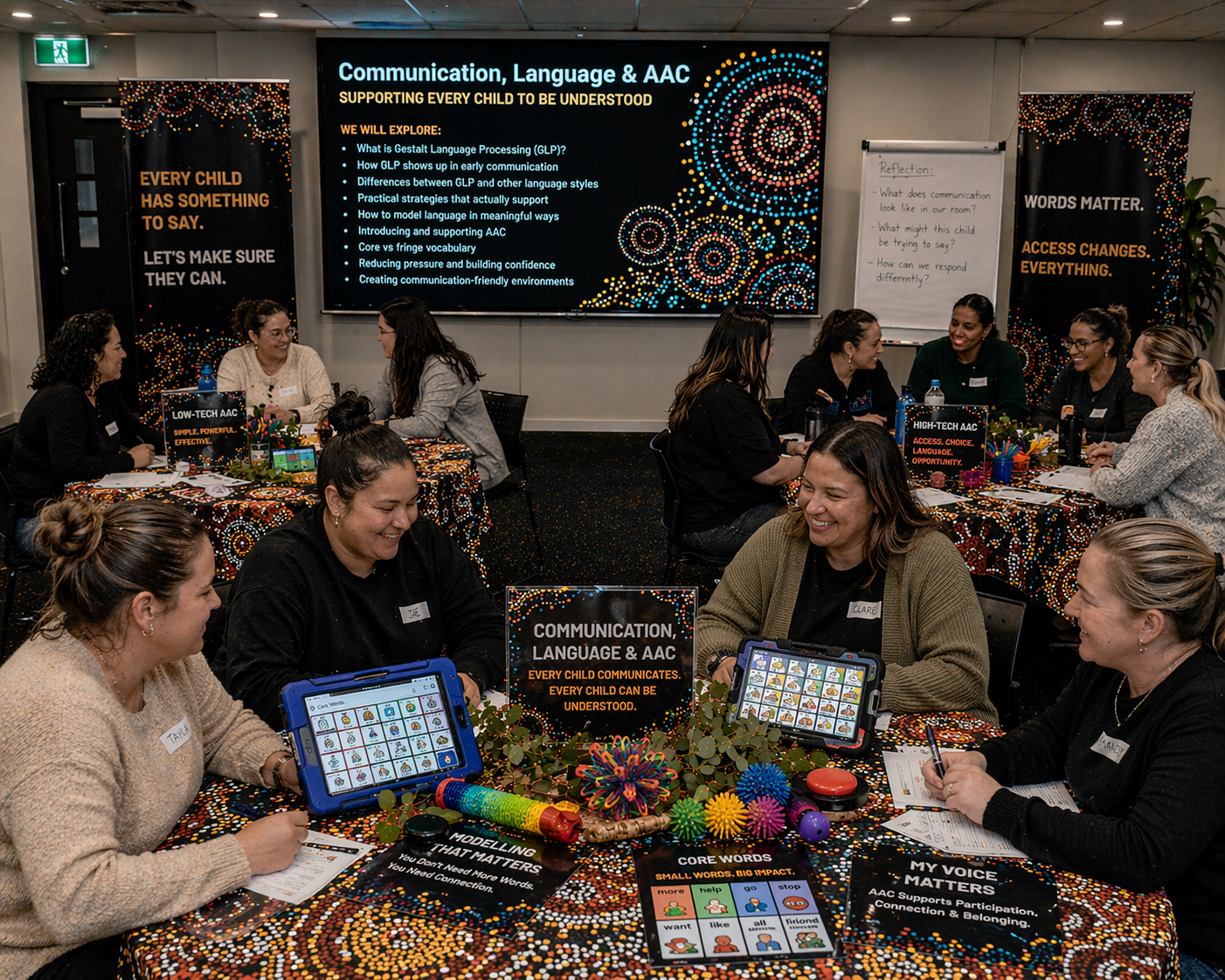
Communication, Language & AAC in Early Learning
This professional development supports educators to understand, recognise, and respond to a wide range of communication styles in early learning environments, including children who are non-speaking, have language delays, or are Gestalt Language Processors.
Grounded in neuroaffirming practice, this session supports educators to move beyond traditional expectations of speech and build inclusive environments where all children can express themselves and be understood.
What this session covers
• Communication beyond spoken language
• Understanding and responding to diverse communication styles
• Supporting non-speaking children and children with language delays
• Introduction to Augmentative and Alternative Communication (AAC)
• Embedding AAC into everyday routines and play-based environments
• Understanding Gestalt Language Processing (GLP)
• Interpreting echolalia and scripted language
• Intentional language modelling to support development and connection
• Creating inclusive opportunities for autonomy, choice, and participation
Key Focus
This session focuses on creating flexible communication environments within early learning settings, ensuring all children have a voice in the classroom.
Educators will be supported to understand a range of communication styles and differences, and how to respond in ways that promote inclusion, autonomy, and meaningful participation.
Who this is for
Early childhood educators, support staff, and teams supporting children with communication differences, speech delays, language delays, or neurodivergent communication styles.
Delivery Options
• In-centre professional development
• Team workshops
• Small group training sessions
• Customised sessions tailored to your service