
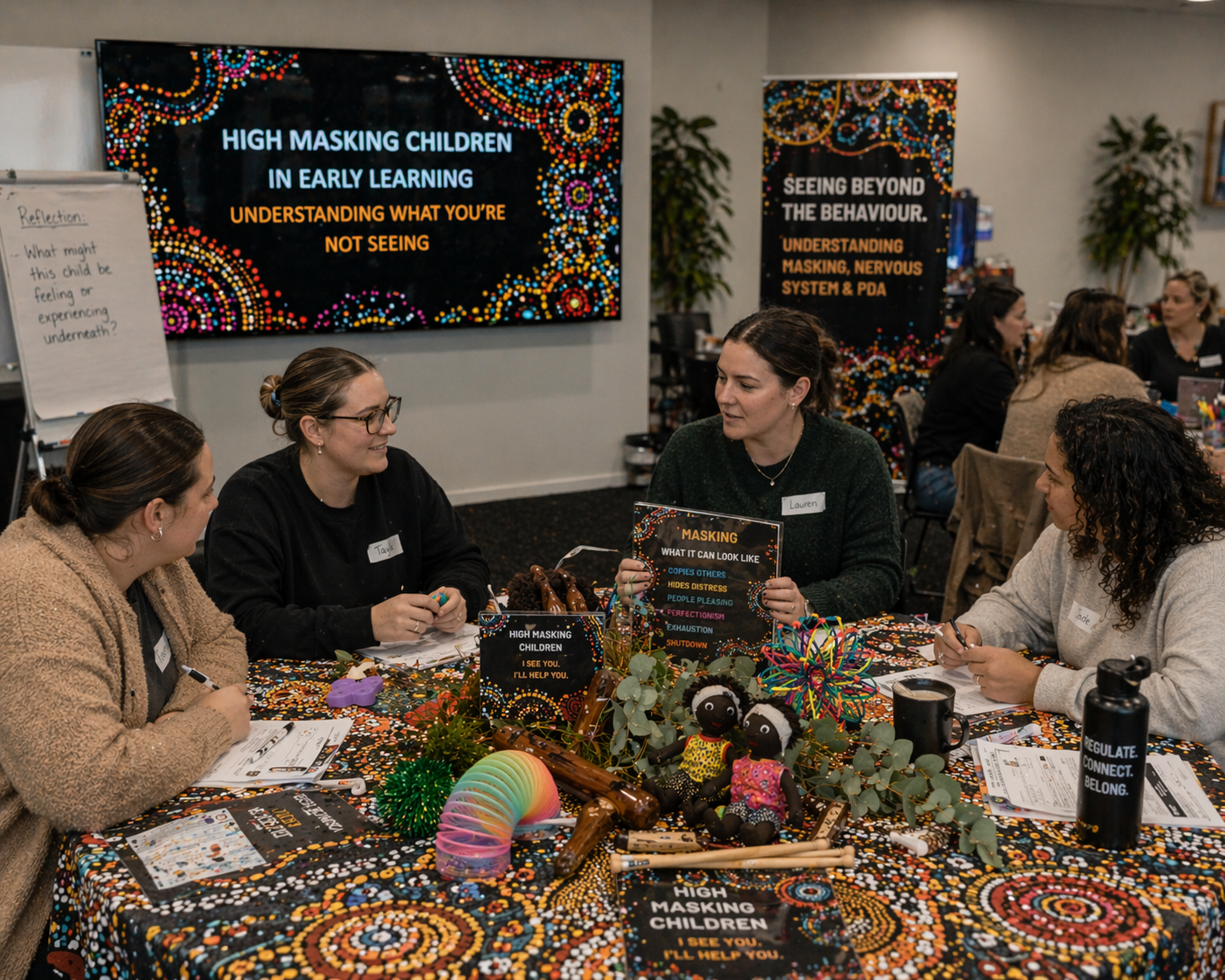
High Masking Children in Early Learning
This professional development explores high masking in neurodivergent children, focusing on the internal experience of masking, its impact on the nervous system, and how it can present in early learning environments.
What this session covers
• What masking is and why neurodivergent children mask
• Signs of masking in early childhood settings
• Internalised behaviours vs externalised behaviours
• The impact of masking on the nervous system (chronic stress, shutdown, burnout)
• Fight, flight, freeze, and fawn responses in masking children
• How PDA can present in high masking children
• Why masking children are often overlooked or misunderstood
• The risks of late identification and unmet needs
• Creating environments where children feel safe to unmask
• Supporting authentic communication and regulation
Key Focus
Recognising the hidden experiences of children who appear “fine,” and creating environments where they feel safe, supported, and able to express their needs without masking.