

Early Childhood Professionals
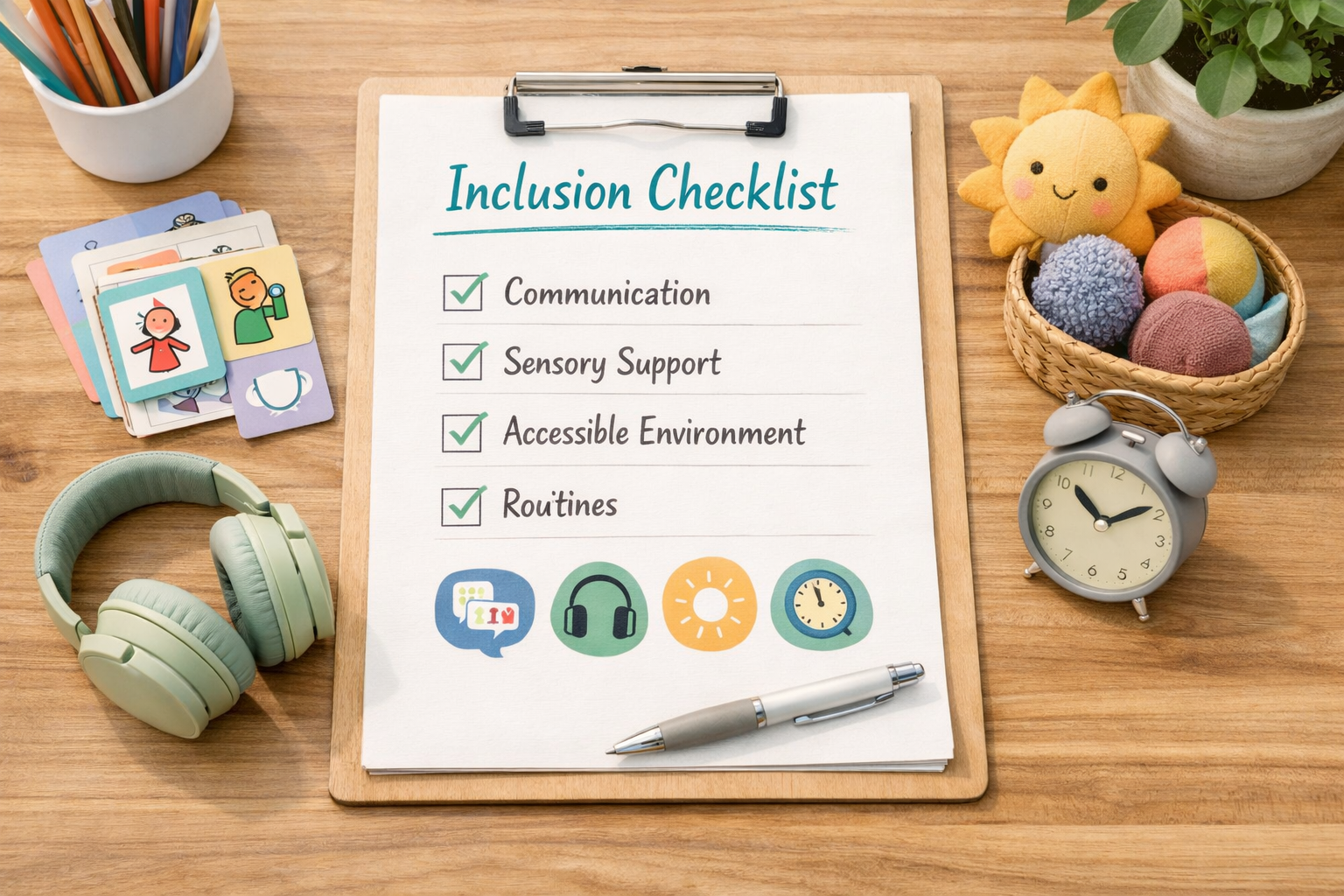
Inclusion Check-In
For centres needing clarity, direction, and realistic next steps.
Feeling stuck, overwhelmed, or unsure how to support the needs in your room? The Inclusion Check-In is a practical, no-pressure consult designed to meet you where you are.
Together, we will explore what is currently happening in your environment, from routines and expectations to behaviour, communication, and regulation needs, through a neuroaffirming and culturally responsive lens.
You will receive
A focused consult tailored to your centre, team, and current challenges
A quick, strengths-based review of your environment and practices
Clear, practical strategies that work within real ratios, real time, and real classrooms
Guidance aligned with the EYLF, NQS, and children’s rights frameworks
You will walk away with a realistic, step-by-step action plan your team can confidently start implementing straight away. Not something that sits in a folder, but something that supports you tomorrow.
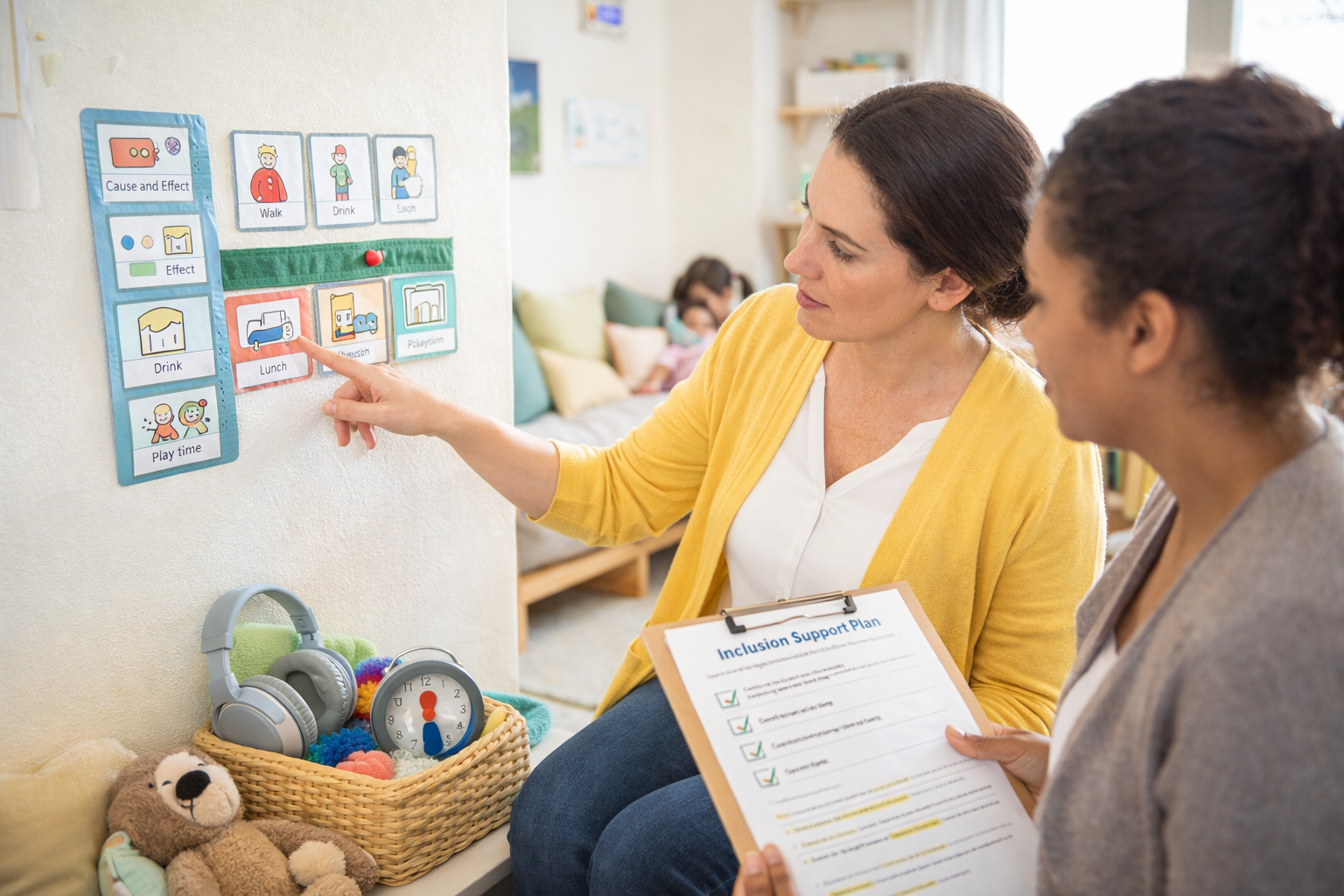
Implementation Support
For centres ready to move from ideas to consistent, everyday practice.
You already have the foundations. This support is about turning those ideas into something your team can confidently use every day.
Implementation Support is a hands-on, practical service designed to embed inclusive practices into your real environment, not ideal scenarios. I work alongside your team to build routines, adjust environments, and strengthen communication and regulation supports in ways that are achievable within your ratios, time, and capacity.
Together, we focus on what will make the biggest difference right now, while building long-term, sustainable practice.
Support may include
Embedding predictable routines and transitions
Developing and using visual supports in meaningful ways
Sensory and environmental adjustments across the day
Communication foundations, including AAC supports
Practical documentation that reflects your practices and aligns with EYLF, NQS, and children’s rights
Everything is tailored to your classroom, your team, and your children so strategies feel supportive, not overwhelming.
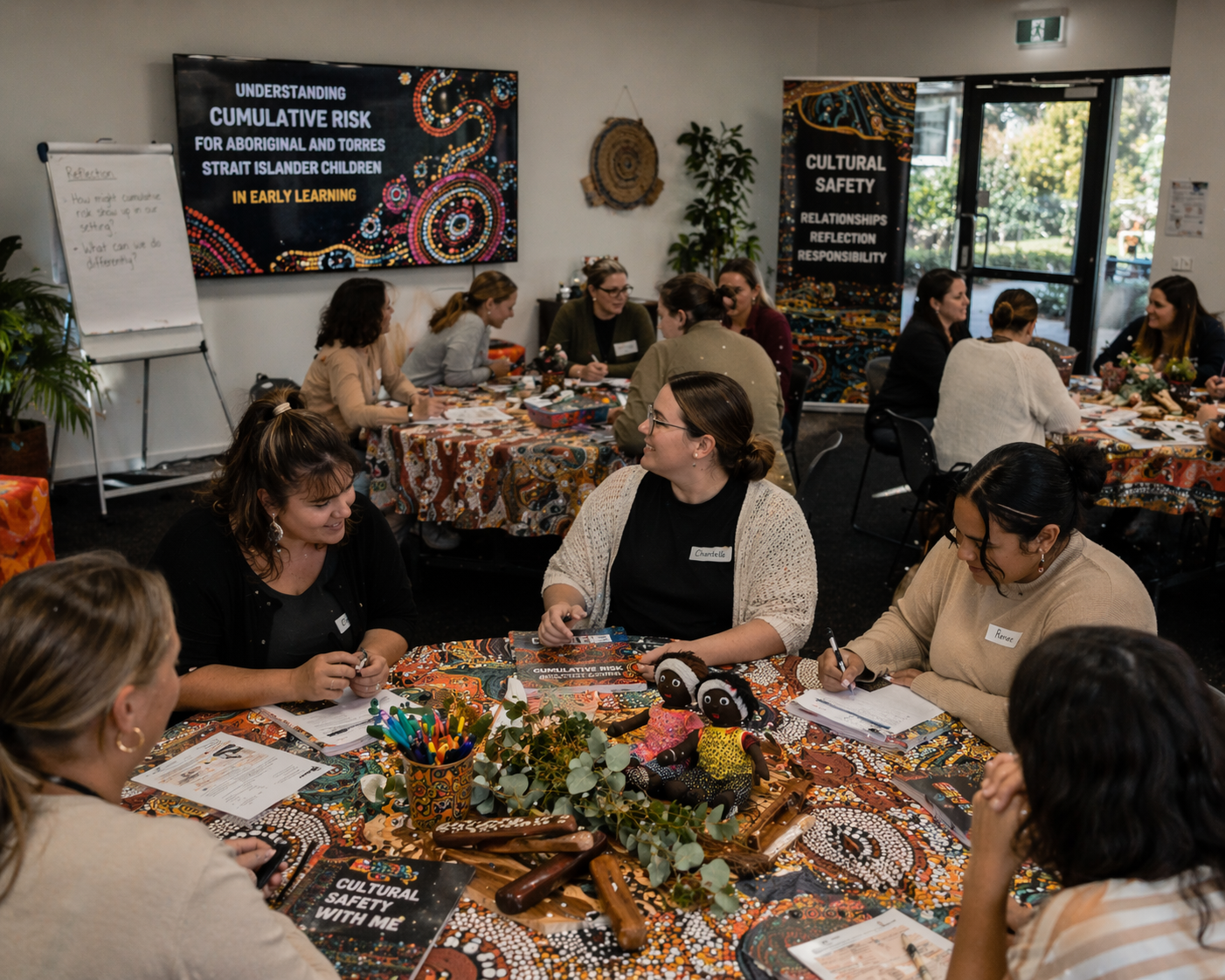
Understanding Cumulative Risk for Aboriginal and Torres Strait Islander Children in Early Learning
This professional development explores the cumulative risk factors Aboriginal and Torres Strait Islander children may experience in early learning environments, and how these layers of risk can impact safety, connection, participation, wellbeing, and access to learning.
Grounded in culturally responsive and reflective practice, this session supports educators to move beyond tokenistic inclusion and build deeper understanding of how systems, environments, relationships, and unrecognised barriers can affect Aboriginal and Torres Strait Islander children and families.
Rather than viewing risk as belonging to the child or family, this professional development encourages educators to reflect on the ways early learning settings can either increase risk or become a place of safety, strength, and belonging.
What this session covers
• Understanding cumulative risk in early childhood education
• How layered risk can impact Aboriginal and Torres Strait Islander children over time
• The role of systems, bias, exclusion, and disconnection in increasing vulnerability
• Moving beyond tokenistic practice toward meaningful cultural safety
• Reflecting on how environments, routines, expectations, and relationships affect children and families
• Recognising the importance of identity, belonging, community, and connection to culture
• Practical ways to create culturally safe and responsive early learning environments
• Strengthening educator reflection, accountability, and everyday practice
Key Focus
This session focuses on helping educators understand how risk can build across a child’s early experiences when cultural safety, belonging, understanding, and responsive support are missing.
Educators will be supported to reflect on their own practice, recognise how early learning environments can either add to or reduce cumulative risk, and build more culturally safe, respectful, and protective spaces for Aboriginal and Torres Strait Islander children and families.
Who this is for
Early childhood educators, educational leaders, support staff, and early learning teams wanting to strengthen culturally safe practice and deepen their understanding of how layered risk impacts Aboriginal and Torres Strait Islander children in education settings.
Delivery Options
• In-centre professional development • Team workshops • Small group training sessions • Customised sessions tailored to your service
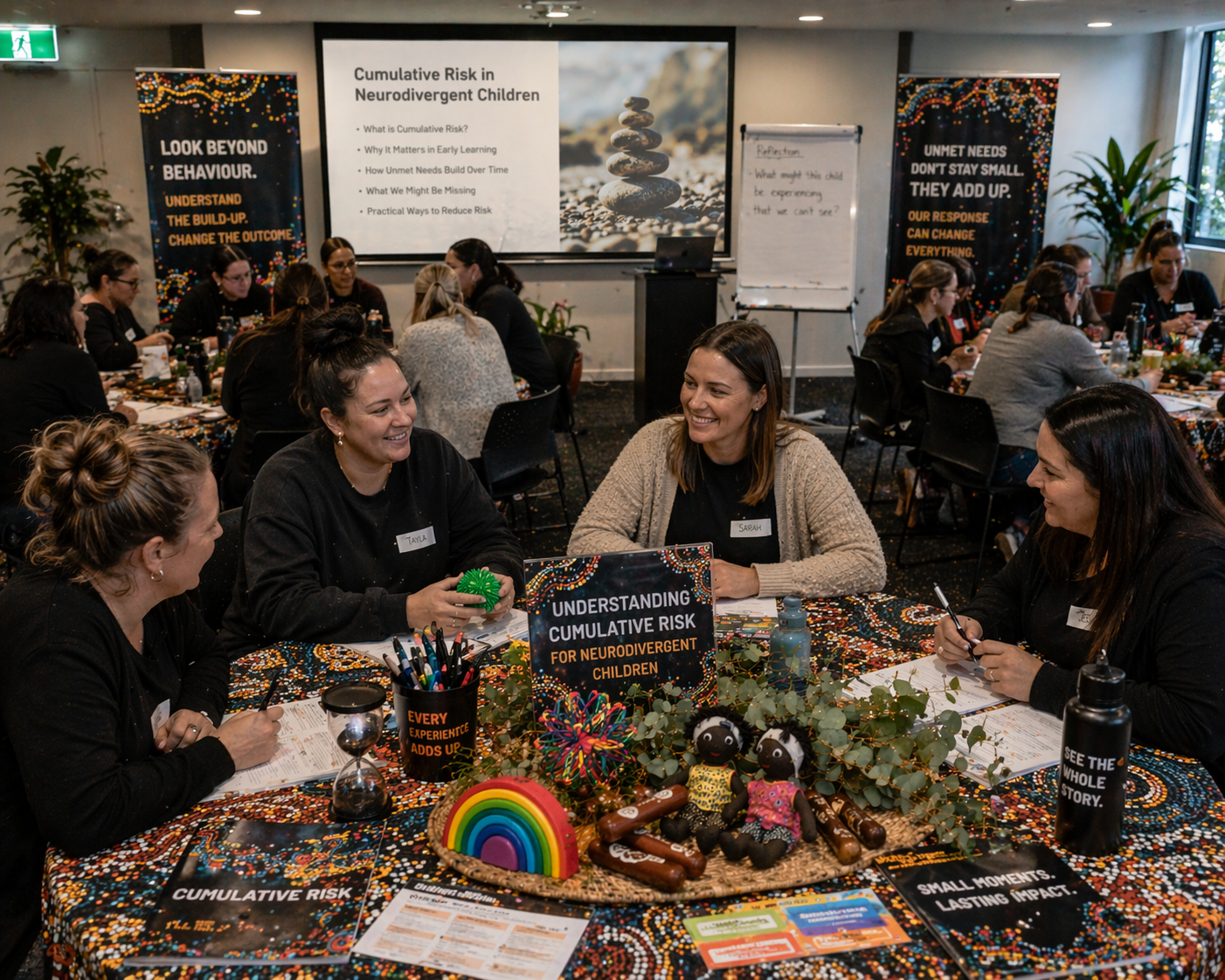
Understanding Cumulative Risk for Neurodivergent Children
Neurodivergent children often experience risk not from a single event, but from layers of unmet needs, misunderstanding, and environmental mismatch over time.
This professional development explores how cumulative risk builds in early learning environments when sensory, communication, emotional, and developmental needs are not recognised or supported.
Grounded in neuroaffirming practice and lived experience, this session supports educators to shift from viewing behaviour as isolated incidents to understanding the long-term impact of repeated disconnection, overwhelm, and misinterpretation.
What this session covers
• What cumulative risk looks like for neurodivergent children
• How unmet sensory, communication, and emotional needs build over time
• The impact of delayed processing and interoception differences
• How repeated overwhelm affects participation and development
• Why some children are misunderstood or overlooked
• The long-term impact of early learning experiences on identity and wellbeing
• The role of early childhood environments in reducing or increasing risk
• Practical strategies to reduce cumulative stress and support regulation
Key Focus
Understanding how everyday experiences in early learning environments can either contribute to cumulative risk or become protective factors for neurodivergent children.
Who this is for
Educators supporting children with developmental differences, suspected neurodivergence, or children experiencing ongoing dysregulation or difficulty engaging.
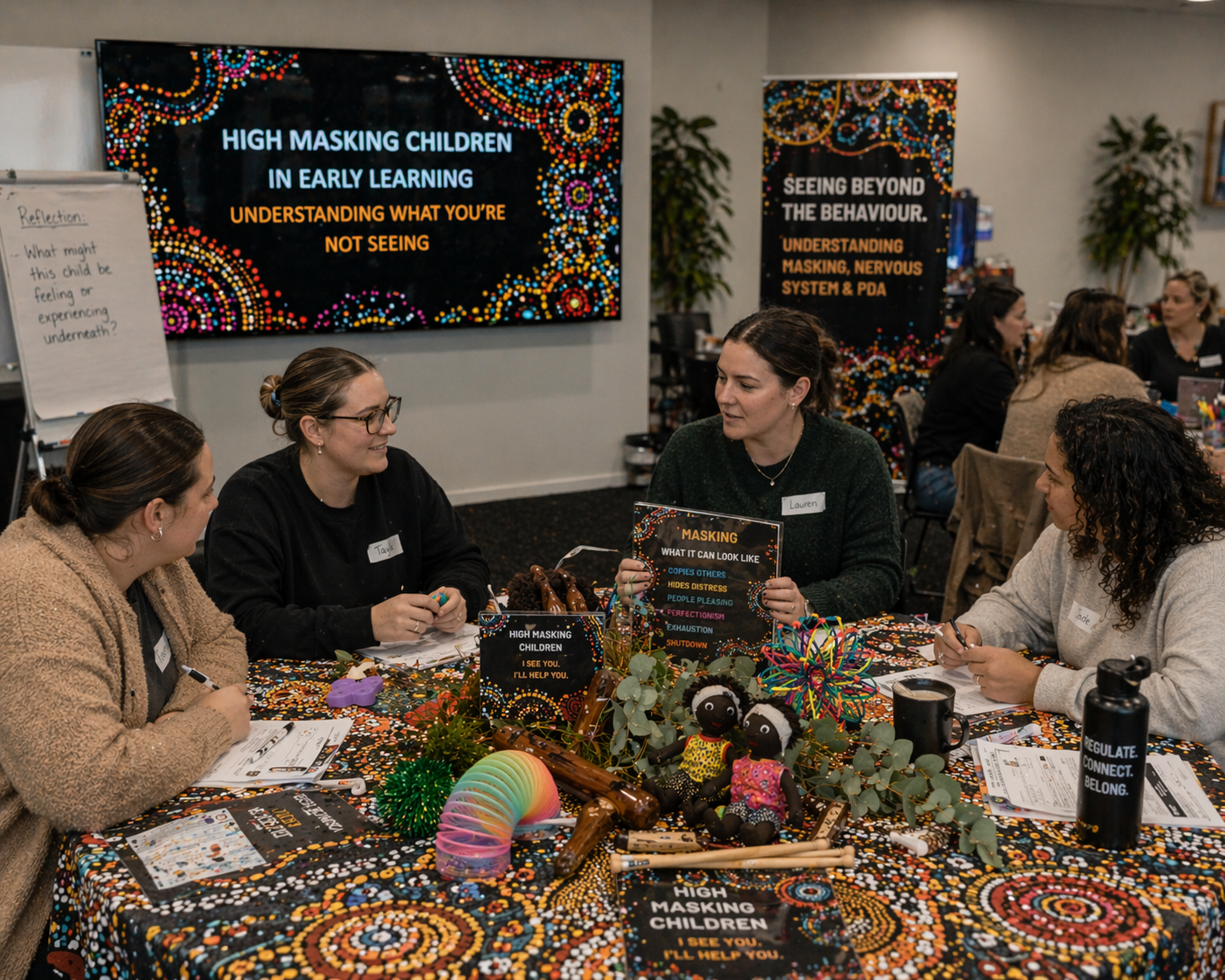
High Masking Children in Early Learning
This professional development explores high masking in neurodivergent children, focusing on the internal experience of masking, its impact on the nervous system, and how it can present in early learning environments.
What this session covers
• What masking is and why neurodivergent children mask
• Signs of masking in early childhood settings
• Internalised behaviours vs externalised behaviours
• The impact of masking on the nervous system (chronic stress, shutdown, burnout)
• Fight, flight, freeze, and fawn responses in masking children
• How PDA can present in high masking children
• Why masking children are often overlooked or misunderstood
• The risks of late identification and unmet needs
• Creating environments where children feel safe to unmask
• Supporting authentic communication and regulation
Key Focus
Recognising the hidden experiences of children who appear “fine,” and creating environments where they feel safe, supported, and able to express their needs without masking.
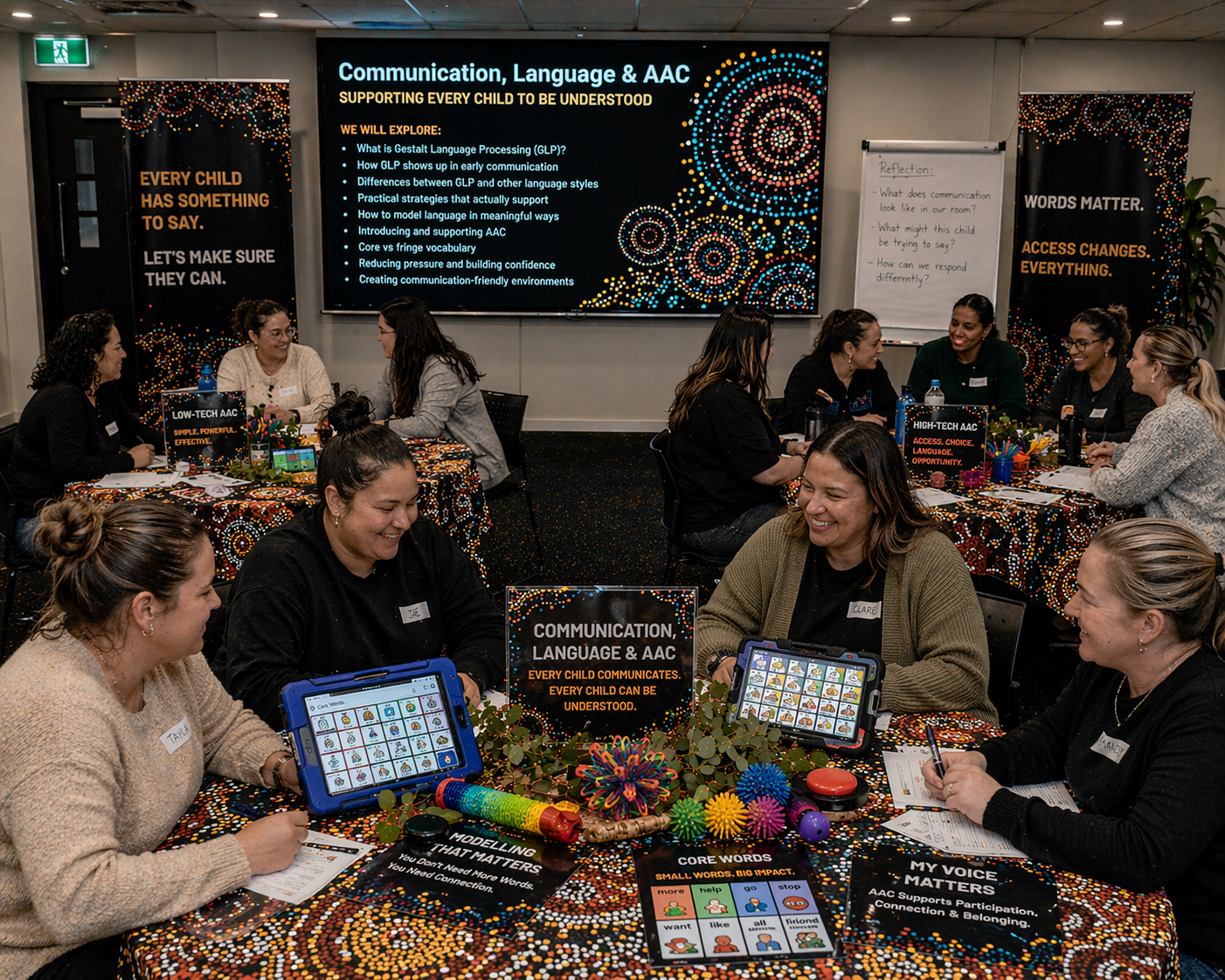
Communication, Language & AAC in Early Learning
This professional development supports educators to understand, recognise, and respond to a wide range of communication styles in early learning environments, including children who are non-speaking, have language delays, or are Gestalt Language Processors.
Grounded in neuroaffirming practice, this session supports educators to move beyond traditional expectations of speech and build inclusive environments where all children can express themselves and be understood.
What this session covers
• Communication beyond spoken language
• Understanding and responding to diverse communication styles
• Supporting non-speaking children and children with language delays
• Introduction to Augmentative and Alternative Communication (AAC)
• Embedding AAC into everyday routines and play-based environments
• Understanding Gestalt Language Processing (GLP)
• Interpreting echolalia and scripted language
• Intentional language modelling to support development and connection
• Creating inclusive opportunities for autonomy, choice, and participation
Key Focus
This session focuses on creating flexible communication environments within early learning settings, ensuring all children have a voice in the classroom.
Educators will be supported to understand a range of communication styles and differences, and how to respond in ways that promote inclusion, autonomy, and meaningful participation.
Who this is for
Early childhood educators, support staff, and teams supporting children with communication differences, speech delays, language delays, or neurodivergent communication styles.
Delivery Options
• In-centre professional development
• Team workshops
• Small group training sessions
• Customised sessions tailored to your service